Why do hospitals with high patient traffic place such importance on the stability of folding chairs?
Date: 2026-07-08 09:44:46
Hospitals are among the most densely populated public spaces—outpatient clinics see thousands of patients daily, and waiting areas, infusion rooms, and corridors are constantly under pressure to be fully occupied. In this high-frequency usage scenario, the stability of hospital folding chairs directly affects patient safety, operational efficiency, and long-term costs. The core reason is simple: instability equals high risk and high wear and tear.
Stability is the first line of defense for safety.
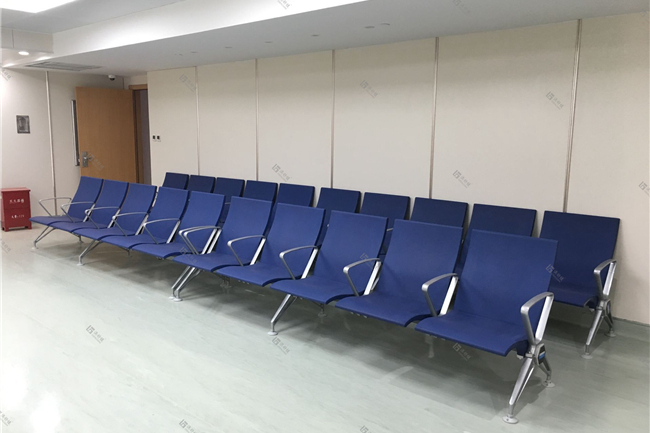
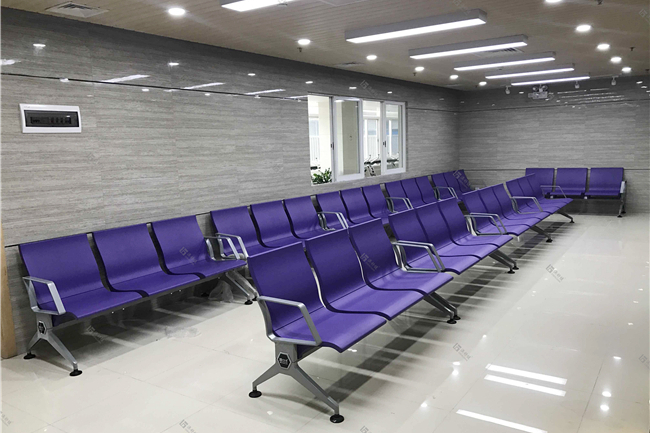
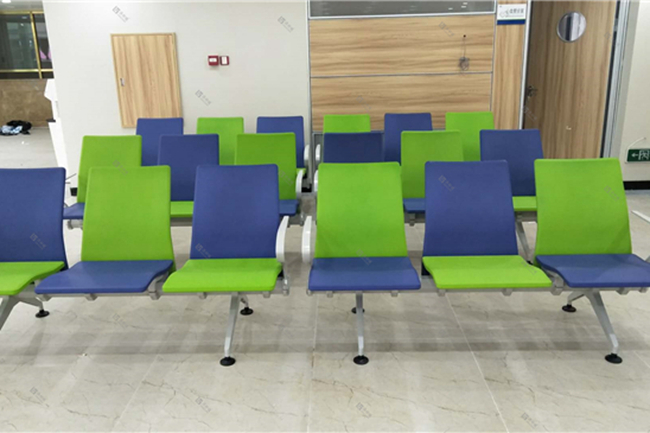
Hospitals have a large number of elderly people, pregnant women, post-operative patients, and people with mobility impairments, all of whom have weaker balance. If a medical folding chair has a loose structure and is prone to tipping over or wobbling, it could easily cause patients to fall. Especially in infusion rooms, where patients have IV needles in their arms, any instability could lead to medical accidents. Hospital waiting chairs must pass rigorous stability tests—they must not tip over when tilted forward, sideways, or backward. The anti-slip pads, reinforced connection points, and high-strength metal frames of medical folding chairs are all designed to prevent accidents.
Stability Determines Durability – Lifespan Guarantee Under High-Frequency Use
In high-traffic areas, a single outpatient folding chair might be sat on hundreds of times a day. Frequent sitting, getting up, moving, folding, and unfolding puts a tremendous strain on the structure of these chairs. Chairs with poor stability quickly develop loose joints and cracked welds, requiring replacement in less than six months. In contrast, robust hospital companion chairs, using thickened steel tubing and precision folding mechanisms, can withstand over 100,000 impacts without breaking, boasting a lifespan of several years. The stability of hospital folding chairs directly determines the frequency of refurbishment and procurement costs.

Stability Facilitates Efficient Space Utilization
Hospital space is extremely valuable. Foldable hospital chairs can be folded away when not in use, freeing up passageways and emergency space. However, folding structures are inherently more prone to wobbling than fixed chairs – hinges, pivots, and other moving parts, if poorly designed or made with insufficient materials, become weaknesses. Highly stable medical folding chairs fold and unfold smoothly without jamming, remaining perfectly still after unfolding, ensuring safe passage and improving the efficiency of medical staff.
Three Key Considerations for Choosing a Hospital Folding Chair
Check Frame Material: Opt for thickened cold-rolled steel or high-quality metal frames, avoiding plastic frames.
Check Anti-slip Design: Ensure the foot pads have anti-slip rubber covers and that the chair's contact with the ground is stable.
Test Folding Mechanism: Perform repeated folding smoothly and check for any wobbling after locking.
OSJ Furniture – A Professional Manufacturer of Hospital Folding Chairs
Founded in 2000, OSJ Furniture (Guangdong oshujian Furniture Manufacturing Co., Ltd.) has focused on public seating for over 20 years, offering a full range of products including hospital folding chairs, medical waiting chairs, and folding companion chairs. With an independent production base of over 80,000 square meters, it boasts a monthly production capacity of 100,000 chairs and an annual output of up to 1.5 million chairs, exporting to over 100 countries and regions worldwide. From structural design to material selection, OSJ hospital folding chairs strictly adhere to public seating safety standards, featuring a sturdy metal frame, precise folding mechanism, and anti-slip/anti-tilt design to meet the stringent requirements of high-traffic medical settings. Choosing OSJ means choosing safety and longevity.
RELATED NEWS